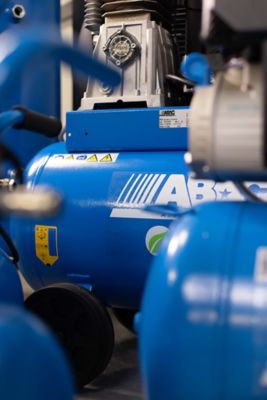

The appropriate size depends on the tyre pressure, tyre volume and frequency of use. Occasional top-ups require less capacity than repeated workshop inflation. Check that the compressor can supply more than the target tyre pressure and provides suitable air delivery for the task.
An air compressor provides a practical source of compressed air for inflating vehicle tyres at home or in a workshop. This guide explains how to select a suitable compressor, connect the correct accessories, set up the system and inflate tyres accurately while following the pressure specified by the vehicle manufacturer.
Table of Contents
- How to Use an Air Compressor to Fill Tyres
- Why use an air compressor for tyre inflation?
- What Equipment Do You Need?
- Choosing an Air Compressor for Tyres
- How to Inflate a Tyre with an Air Compressor
- Using the Regulator and Pressure Gauge
- Compressor Setup Checks Before Inflation
- Portable Compressors and Workshop Compressors
- FAQs
How to Use an Air Compressor to Fill Tyres
Tyre inflation is one of the most common uses of an air compressor in garages, workshops and home maintenance settings. A suitable compressor can provide a controlled supply of compressed air for topping up tyres, correcting pressure differences and supporting routine vehicle care.
The result depends on more than the compressor alone. The compressor must deliver the required pressure, and the hose, connectors, pressure gauge and tyre inflator must work together as a complete setup. This guide focuses specifically on the compressor and the equipment needed to use compressed air for tyre inflation.
How to Inflate a Tyre with an Air Compressor
Locate the vehicle manufacturer's recommended pressure on the vehicle pressure label or in the owner manual. Do not use the maximum pressure shown on the tyre sidewall as the operating target.
Place the compressor on a stable surface, check that the hose and accessories are in good condition, and connect the equipment according to the compressor instructions.
Attach the air hose to the compressor outlet and connect the tyre inflator. Make sure all fittings are fully engaged and secure.
If the compressor has a regulator, set an appropriate outlet pressure for the task. The available compressor pressure must be sufficient for inflation, but the final tyre pressure must still be controlled at the tyre inflator.
Remove the valve cap and connect the inflator firmly to the valve. Read the existing pressure before adding air.
Operate the tyre inflator in short intervals. Pause regularly to read the gauge and avoid exceeding the vehicle manufacturer's recommended pressure.
Stop when the correct pressure is reached. Recheck the reading, disconnect the inflator and replace the valve cap securely.
When the task is complete, follow the compressor instructions for shutdown, pressure release, condensate management and storage. Coil the hose without sharp bends and keep fittings protected from dirt.
Using the Regulator and Pressure Gauge
The compressor regulator controls the pressure supplied to the hose, while the tyre inflator gauge indicates tyre pressure during the task. These are related but separate measurements. The regulated outlet pressure needs to be high enough to move air into the tyre, but the tyre must be filled only to the vehicle manufacturer's specified value.
Add air in short bursts and allow the gauge reading to stabilise between adjustments. If the inflator includes a controlled air-release function, use it to make small corrections when pressure is too high. Do not disconnect components while they are under uncontrolled pressure.
Compressor Setup Checks Before Inflation
- Inspect the power cable, hose and connections for visible damage
- Confirm that the couplings are compatible and fully connected
- Check the compressor pressure setting before opening airflow to the tyre
- Keep air inlets and ventilation areas unobstructed
- Drain condensate and maintain the compressor as directed by its operating instructions
- Use a tyre inflator and gauge suitable for the pressure range
Portable Compressors and Workshop Compressors
Portable compressors suit users who value mobility and occasional tyre inflation. They can be stored in a garage and moved close to the vehicle when needed. Workshop compressors generally provide a larger compressed air supply and may support tyre inflation alongside other pneumatic applications.
The right choice depends on frequency of use, required air delivery, tyre size, available power and whether the compressor will operate other tools. For any setup, confirm that the compressor, hose, fittings and tyre inflator are compatible.
Common Questions
Use a compressor only when its pressure and air delivery are suitable and when compatible hoses, fittings and a tyre inflator are available. Follow the compressor instructions and the vehicle manufacturer's tyre pressure specification.
A regulator helps control the pressure delivered from the compressor to the hose. The tyre inflator gauge is still required to monitor the actual tyre pressure and stop at the vehicle manufacturer's recommended value.
The compressor restarts when stored pressure falls to its cut-in level. Frequent cycling can be more noticeable with a smaller tank or during repeated inflation. Use the compressor within its specified operating limits.
You normally need an air hose, compatible fittings, a tyre inflator with a pressure gauge and a suitable valve connector. All components should be rated for the compressor pressure and connected securely.