Blog

When Do You Need a Two‑Stage Compressor?

Learn when a two‑stage compressor is the right choice by understanding pressure limits, duty cycle, and real industrial applications.
When Do You Need a Two‑Stage Compressor

Knowing when to choose a two‑stage compressor is not about power alone. It depends on pressure, duty cycle, and how your application truly uses compressed air. This guide explains when a two‑stage piston compressor is the right choice, when a single‑stage unit is sufficient, and how to avoid costly mismatches in industrial and manufacturing environments.

When Do You Need a Two‑Stage Compressor?

When we talk with customers about compressed air, one question comes up again and again: “When do I actually need a two‑stage compressor, and when is a single‑stage enough?” 

The answer is rarely about horsepower or tank size. It comes down to three factors that always need to align

  • Required pressure 
  • Duty cycle (how long the compressor runs) 
  • The real application using the air 

This article explains how those elements connect, when a two‑stage piston compressor makes sense, and when a single‑stage piston compressor remains the right solution. 

The Basics: What Is a Two‑Stage Compressor?

A two‑stage compressor compresses air in two successive steps instead of one. 

Imagine climbing a steep hill. You can try to sprint straight up, or you can climb in two shorter sections with a pause in between. The second option is easier and more controlled. 

A two‑stage compressor works in the same way: 

  • First stage: air is compressed to an intermediate pressure 
  • Intercooling: heat is removed 
  • Second stage: air is compressed again to the final pressure 

Splitting the compression into two steps helps manage heat and mechanical stress, especially at higher pressures. 

Single‑stage piston compressors 

  • Compress air in one step 
  • Typically used for standard workshop air 
  • Best suited for intermittent operation and moderate pressure 

Two‑stage piston compressors 

  • Use two compression stages in series 
  • Commonly selected when higher pressure or longer operating periods are required 
  • Better suited for demanding applications when correctly specified 

Both technologies have their place—the key difference is how hard and how long they are expected to work.

Duty Cycle: The Hidden Number That Decides Everything

Duty cycle describes how much of the time a compressor can run within a given period without exceeding its design limits. 

For example: 

  • 60% duty cycle → runs for 6 minutes, rests for 4 
  • 100% duty cycle → designed for continuous operation 

Ignoring duty cycle is one of the most common causes of premature compressor failure. 

When a compressor operates beyond its rated duty cycle: 

  • Internal temperatures rise 
  • Oil degrades faster 
  • Bearings, valves, and seals wear prematurely 
  • Electrical components run hotter than intended 

This typically results in more shutdowns, alarms, and unplanned maintenance. 

The largest cost is often lost production, not the compressor itself. Emergency repairs, temporary rental units, and downtime can quickly outweigh the price difference between correctly specified equipment and an undersized solution. 

For this reason, two‑stage piston compressors are often selected when pressure is high and duty cycle is demanding, but still within the limits of reciprocating technology. 

Pressure: When One Stage Is Not Enough

Single‑stage piston compressors are well suited for standard workshop pressure ranges. As pressure increases, heat and stress rise quickly when compression is completed in a single step.

Applications that often lead to two‑stage compression include: 

  • High‑pressure pneumatic processes 
  • Certain surface preparation or cleaning tasks 
  • Packaging or forming operations requiring elevated pressure 

In these cases, two‑stage compression provides a more controlled and thermally stable way to reach higher pressures. 

Products

Piston compressors

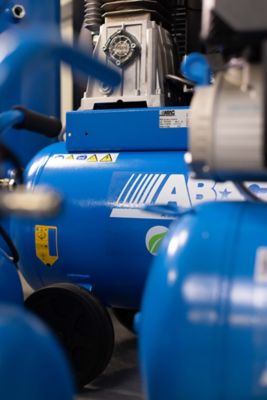
ABAC piston compressors are the perfect solution for a wide range of applications, providing you with dependable and robust air compression. Whether you need a portable model for on-the-go use or a large and powerful unit for heavy-duty work, our piston compressors are designed to meet your exact needs.

Quick Checklist

A two‑stage piston compressor may be appropriate if several of the following apply: 

  • Required pressure is higher than typical workshop air
  • Compressor runs for long periods with limited rest
  • Multiple tools or processes operate at the same time
  • Overheating or frequent shutdowns occur
  • Maintenance intervals are becoming shorter

Why Industrial Applications Are More Exposed

Industrial plants often combine long operating hours, variable demand, and high downtime costs. In these conditions, a compressor selected only for pressure, but not for duty cycle, often becomes a weak point in the system. 

Manufacturing Compressor Needs: Seeing the Whole Picture

Industrial plants often combine long operating hours, variable demand, and high downtime costs. In these conditions, a compressor selected only for pressure, but not for duty cycle, often becomes a weak point in the system. 

  1. What pressure is actually required by the most demanding process? 
  2. How much air is needed over time, including peaks? 
  3. How long does demand last during a working day? 

Piston compressors, including two‑stage designs, are typically suited for: 

  • Moderate air flows 
  • Higher pressures 
  • Intermittent to demanding duty, depending on model 

They are not automatically designed for unlimited continuous operation unless explicitly rated.

Some industrial environments operate piston compressors for long hours, but correct rating and sizing are critical. Not all two‑stage compressors are suitable for true 24/7 operation, even though they can handle higher pressure. 

Advantages of a Two‑Stage Air Compressor

Thermal Behaviour and Stability 

Two‑stage compression helps control temperature, supporting stable performance at higher pressures. 

Reliability and Predictability 

Lower thermal stress often translates into: 

  • Fewer unplanned stops 
  • More predictable maintenance 
  • Longer component life 

Supporting Air Quality 

Stable pressure and cooler operation support downstream air treatment systems, which is important in sensitive production environments. 

FAQs – Two‑Stage Compressors

No. A two‑stage compressor is the better choice only when pressure and duty cycle requirements justify it. For light or intermittent use, a single‑stage compressor is often sufficient.

Some heavy‑duty models are designed for high duty cycles, but not all two‑stage piston compressors are intended for continuous operation. Always check the manufacturer’s duty cycle rating.

Often yes, but pressure alone is not enough. Duty cycle and how long that pressure is needed are equally important.

Typical signs include continuous running, pressure drops, frequent overheating alarms, and oil or filters needing replacement earlier than planned.

contacts

Contact us

Get help, reach out to our Branches for expert support with air compressors.

Contact_us_man_calling_in industrial_environment

dealers

Find a Local Partner

Find local authorised partners for air compressors. Purchase, install, and service with confidence.

Dealers_partners_world_network_concept

Professional Air Solutions

ABAC - The Compressed Air Specialist Near You

We are one of the world's leading providers of reliable and innovative compressed air solutions. We make a difference through technology, functionality and design, thanks to our in-house research and development team and extensive experience in the compressed air sector.

Need help getting started?

Products

Products Portfolio

Piston compressors, rotary screw compressors, air tools, parts and more. Explore the ABAC products portfolio.

ABAC piston compressors close up showroom

Solutions

Identify Your Air Needs

Identify the tasks in your industry that demand compressed air. 

A portrait of a mature industrial man and woman engineer with tablet in a factory, working.

Air Compressor Service

Service & Aftermarket

Get help, maintenance parts, manuals, and maintenance tips from our industry experts in the service dashboard.

Cropped image of mechanics working in auto service. One is holding a spanner while the other is showing Ok sign