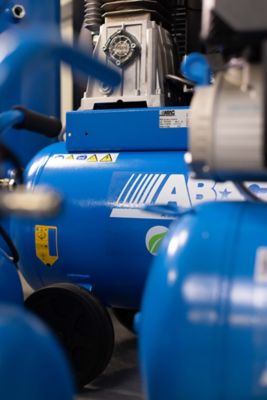

Most sandblasting applications require significantly more airflow than conventional pneumatic tools. Depending on nozzle size, airflow requirements can range from 850 l/min (30 CFM) to more than 3,400 l/min (120 CFM).
Sandblasting is one of the most demanding compressed air applications, requiring high airflow and consistent pressure for effective surface preparation. Whether you're removing rust, paint, or coatings, choosing the right air compressor for sandblasting ensures faster work, better blasting performance, and reduced downtime. This guide explains the key specifications and considerations for selecting a reliable sandblasting air compressor.
Table of Contents
- How to Choose the Best Air Compressor for Sandblasting
- Why Sandblasting Demands High Airflow
- Key Air Compressor Specifications for Sandblasting
- Why Air Quality Matters in Sandblasting
- Matching the Compressor to the Blasting Application
- Common Mistakes When Choosing an Air Compressor for Sandblasting
- Common Questions
How to Choose the Best Air Compressor for Sandblasting
Sandblasting is widely used in automotive restoration, metal fabrication, construction, and industrial maintenance for cleaning, stripping, and preparing surfaces. However, unlike many pneumatic tools, blasting equipment consumes a significant volume of compressed air continuously throughout operation.
As a result, selecting the right air compressor for sandblasting is critical. An undersized compressor can lead to pressure drops, reduced blasting efficiency, and frequent interruptions, while a properly sized system helps maintain a consistent abrasive flow and efficient material removal.
In this guide, you'll learn the key factors to consider when choosing among the various air compressors for sandblasting, including airflow, operating pressure, tank size, and air quality requirements.
Why Air Quality Matters in Sandblasting
Compressed air used for sandblasting should be clean and free from excessive moisture.
Moisture in the air supply can cause:
- Abrasive media clogging
- Reduced blasting efficiency
- Equipment blockages
- Uneven media flow
To improve system reliability, many blasting operations use:
- Water separators
- Aftercoolers
- Air dryers
- Filtration systems
Maintaining dry compressed air helps ensure consistent abrasive delivery and reduces downtime.
Matching the Compressor to the Blasting Application
The ideal sandblasting air compressor depends on the size and frequency of the work being performed.
Automotive Restoration
Vehicle restoration projects often involve removing paint, rust, and corrosion from body panels and components. These applications typically benefit from compressors capable of delivering at least 1,400–2,000 l/min (50–70 CFM).
Workshop and Fabrication Applications
Metal workshops frequently use sandblasting for cleaning welded parts, steel structures, and fabricated components. Medium- to high-capacity compressors are generally preferred for maintaining productivity.
Industrial Surface Preparation
Large-scale blasting applications such as shipyards, bridges, storage tanks, and structural steel require high-volume compressed air systems capable of delivering continuous airflow for extended periods.
Common Mistakes When Choosing an Air Compressor for Sandblasting
Underestimating Airflow Requirements
Many users focus on pressure alone, overlooking the large airflow demand associated with blasting equipment.
Choosing a Compressor Based Only on Tank Size
A large tank cannot compensate for insufficient airflow production.
Ignoring Duty Cycle Requirements
Sandblasting is a continuous process that places significant demands on the compressor. Ensure the system is designed for prolonged operation.
Neglecting Air Treatment
Moisture can cause abrasive media to clog and reduce overall blasting performance.
Common Questions
Both are important, but airflow is usually the limiting factor. A compressor must provide sufficient l/min (CFM) while maintaining the required operating pressure.
Small compressors may work for occasional light-duty blasting tasks with small nozzles, but they often struggle to deliver the airflow needed for continuous operation.
Most sandblasting applications operate between 6 and 8 bar (87–116 PSI), although some heavy-duty industrial processes may require higher pressures.
Moisture can cause abrasive media to clump together, leading to blockages, inconsistent blasting performance, and increased equipment downtime. Proper air treatment helps prevent these issues.