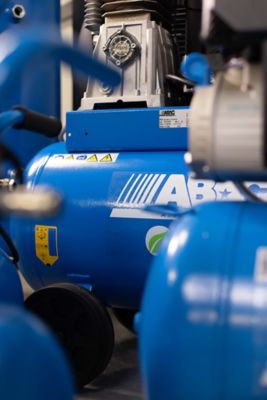

A fixed speed compressor operates at a constant motor speed, while a variable speed compressor adjusts its output according to air demand.
Choosing an air compressor involves more than selecting the right pressure and airflow. One of the most important decisions is whether a fixed speed or variable speed compressor is the better fit for your application. While both technologies are designed to deliver compressed air reliably, they perform differently depending on how air demand changes throughout the working day.
This guide explains the differences between fixed speed and variable speed compressors, when each option makes sense, and which factors should influence your decision.
Table of Contents
- Fixed Speed Air Compressors Explained
- What Is a Variable Speed Air Compressor?
- The Most Important Question: Is Your Air Demand Stable or Variable?
- When a Fixed Speed Compressor Is Usually the Better Choice
- When a Variable Speed Compressor Makes More Sense
- Looking Beyond Purchase Price
- Which Compressor Technology Is Right for You?
- FAQs – Fixed Speed vs Variable Speed Air Compressors
Fixed Speed Air Compressors Explained
A fixed speed air compressor operates at a constant motor speed whenever it is running. The compressor produces a fixed amount of compressed air and typically works between predefined pressure limits.
When system pressure drops, the compressor starts producing air. Once the target pressure is reached, the unit transitions to an unloaded state or stops, depending on the system configuration.
Because the compressor always operates at the same speed, fixed speed technology is often valued for its simplicity and predictable performance.
Typical Advantages
- Straightforward operation
- Proven and reliable technology
- Lower initial investment
- Ideal for stable air consumption patterns
What Is a Variable Speed Air Compressor?
A variable speed air compressor continuously adjusts its motor speed to match the air required by the system.
Instead of repeatedly cycling between loaded and unloaded operation, the compressor automatically increases or decreases output according to demand. This allows the machine to respond more effectively to changing operating conditions.
Variable speed technology is commonly used in environments where compressed air consumption varies throughout the day.
Typical Advantages
- Air production adapts to demand
- Stable system pressure
- Reduced unloading periods
- Potential for lower energy consumption
The Most Important Question: Is Your Air Demand Stable or Variable?
The choice between fixed speed and variable speed technology often depends on one factor: how much your air consumption changes during operation.
If your equipment uses nearly the same amount of compressed air throughout the day, a fixed speed compressor may be a suitable option.
If demand frequently rises and falls, a variable speed compressor can adjust output more effectively to follow those changes.
Understanding your usage profile is often more important than focusing solely on compressor specifications.
When a Fixed Speed Compressor Is Usually the Better Choice
Fixed speed compressors are commonly selected when compressed air demand remains relatively constant.
Examples include:
- Dedicated production equipment
- Applications with predictable operating cycles
- Small workshops with limited daily operating hours
- Installations where simplicity is a priority
In these situations, fixed speed technology can provide dependable performance without unnecessary complexity.
When a Variable Speed Compressor Makes More Sense
Variable speed compressors are often preferred when air demand changes significantly during the working day.
Examples include:
- Multi-user workshops
- Facilities with changing shift patterns
- Applications with intermittent air consumption
- Systems where pressure stability is particularly important
By adapting output to changing requirements, variable speed compressors can offer greater flexibility in these environments.
Looking Beyond Purchase Price
Many buyers naturally focus on the initial purchase cost of a compressor.
However, a compressed air system continues to operate for years, making long-term operating expenses an important consideration. Installation, maintenance, service intervals and energy use all contribute to the overall cost of ownership.
For this reason, the lowest purchase price does not always represent the most suitable long-term solution.
Which Compressor Technology Is Right for You?
There is no universal answer.
A fixed speed compressor can be the ideal choice for applications with steady air demand and straightforward operating requirements.
A variable speed compressor may provide advantages where air consumption changes frequently and maintaining stable system performance is a priority.
The best solution depends on how compressed air is actually used within your application rather than simply choosing the newest technology available.
FAQs – Fixed Speed vs Variable Speed Air Compressors
Not necessarily. The most suitable option depends on the application, operating profile and air consumption pattern.
Fixed speed compressors are often suitable for applications with relatively constant air demand and predictable operating conditions.
Air demand determines how the compressor will operate throughout the day. Understanding consumption patterns helps identify the most appropriate compressor technology.
Yes. Different compressor technologies manage changes in demand differently, which can influence how consistently system pressure is maintained.