Blog

How to Choose the Right 2 Stage Air Compressor

Discover how a 2 stage air compressor works, typical applications, and key criteria to consider when selecting a two‑stage piston compressor for professional use.
How to Choose the Right 2 Stage Air Compressor

Choosing the right 2 stage air compressor requires a clear understanding of your application, air demand, and operating conditions. This guide explains how two‑stage piston compressors work, where they are commonly used, and which factors to consider when selecting a suitable system, based on recognised compressed air principles and typical industrial use cases.

What Is a 2 Stage Air Compressor?

A 2 stage air compressor is a type of compressor in which air is compressed in two successive steps before being delivered to the receiver tank. This configuration is widely used in piston (reciprocating) compressor technology for applications requiring higher pressure or more demanding operating conditions compared to single‑stage units. 

In simplified terms, the process typically involves: 

  • Initial compression of intake air to an intermediate pressure
  • Cooling of the compressed air between stages
  • A second compression step to reach the final working pressure

Compared with single‑stage piston compressors, two‑stage designs are commonly selected where higher pressure levels, improved thermal behaviour, or longer operating cycles are required, depending on model specification and installation conditions. 

This article focuses on two‑stage reciprocating (piston) air compressors, which are commonly used in professional workshops and industrial environments where compressed air plays a supporting role in daily operations. 

How a 2 Stage Air Compressor Works

  1. Air intake
    Ambient air is drawn through a filtration system to remove dust and contaminants. 
  2. First compression stage
    Air is compressed to an intermediate pressure level. As with all compression processes, air temperature increases during this step. 
  3. Intercooling
    The compressed air passes through an intercooling element, where heat is reduced before the second compression stage. 
  4. Second compression stage
    The cooled air is compressed further to the final operating pressure defined by the compressor design.
  5. Air storage
    The compressed air is transferred to the receiver tank, from which it is distributed to downstream equipment. 

The intercooling phase helps to: 

  • Limit operating temperatures 
  • Improve compression efficiency 
  • Reduce stress on internal components 

These characteristics contribute to stable operation when the compressor is used within its rated operating limits. 

Single‑Stage vs 2 Stage Piston Compressors

Choosing between a single‑stage and a two‑stage piston compressor depends on pressure requirements, air demand, and usage patterns.

Typically used for: 

  • Intermittent operation
  • Lower pressure requirements (commonly up to approximately 8 bar, model dependent)

Common applications include: 

  • General maintenance
  • Light workshop tools
  • Occasional pneumatic use

Typically selected for: 

  • Higher pressure requirements (commonly around 10–11 bar or even higher –15 bar, depending on configuration)
  • More demanding or frequent use
  • Multiple air consumers operating simultaneously

They are commonly found in professional workshops and production environments where air demand exceeds the practical limits of single‑stage compressors.

Products

Piston compressors

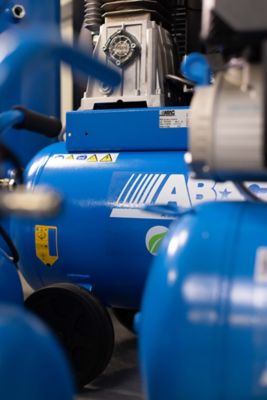
ABAC piston compressors are the perfect solution for a wide range of applications, providing you with dependable and robust air compression. Whether you need a portable model for on-the-go use or a large and powerful unit for heavy-duty work, our piston compressors are designed to meet your exact needs.

Typical Applications of 2 Stage Air Compressors

Two‑stage piston compressors are used across a wide range of professional environments, provided that system sizing and air quality are appropriately managed. 

Common application areas include:

  • Automotive workshops
    Pneumatic tools, surface preparation equipment, and spray applications. 
  • Woodworking and furniture production
    Air‑powered fastening, sanding, finishing, and CNC support functions. 
  • Metalworking and fabrication
    Grinding, cutting, surface preparation, and assembly operations. 
  • Food and beverage processing
    Packaging, conveying, and automation tasks, typically with additional air treatment components. 
  • Industrial maintenance and manufacturing
    General pneumatic supply for machines and production support.

Actual suitability depends on air flow, pressure, duty cycle, and required air quality.

Key Characteristics of 2 Stage Air Compressors

When selected and operated according to their technical specifications, two‑stage piston compressors typically offer: 

  • Higher pressure capability compared to single‑stage piston designs 
  • Improved thermal behaviour due to staged compression 
  • Balanced mechanical loading, supporting consistent performance 
  • Compatibility with air treatment systems such as dryers and filters 

Performance, energy consumption, and service intervals vary depending on model design, installation, operating conditions, and maintenance practices. 

How to Choose a Suitable 2 Stage Air Compressor

Selection should be based on calculated requirements rather than nominal power alone.

Document all tools, machines, and processes using compressed air, including: 

  • Required pressure
  • Air flow demand
  • Simultaneous usage

Estimate peak air consumption based on concurrent use, including a reasonable allowance for system losses and future expansion.

If applications require pressure levels above the practical range of single‑stage piston compressors, two‑stage compression may be appropriate.

Evaluate: 

  • Daily operating hours
  • Load cycles
  • Ambient conditions

Two‑stage piston compressors are generally selected for moderate to demanding use, provided they are properly sized and installed. 

Regulated applications often require: 

  • Adequate ventilation 
  • Noise management measures 
  • Filtration and drying systems 
  • Compliance with local safety and electrical standards 

Living With a 2 Stage Air Compressor

Noise

Sound levels depend on design, enclosure, installation, and operating speed. Proper placement and isolation can significantly improve workplace comfort. 

Maintenance

Two‑stage compressors contain additional components but benefit from reduced thermal stress. Maintenance requirements follow manufacturer instructions and depend on operating conditions. 

Energy Use

While initial investment may be higher than for single‑stage models, energy efficiency and operational stability can contribute to favourable total cost of ownership when matched correctly to demand. 

Frequently Asked Questions

The main difference is how the air is compressed. 

A single‑stage compressor compresses air in one step before storing it in the tank, while a 2 stage air compressor compresses air in two successive steps with cooling in between. This staged process helps manage heat and is commonly used where higher pressure or more demanding operating conditions are required, depending on the compressor model and application.

A 2 stage piston air compressor is typically considered when applications require: 

  • Higher working pressure than is practical with a single‑stage compressor 
  • More frequent or longer operating periods 
  • Multiple air tools or processes running at the same time 

Final suitability depends on required airflow, pressure, duty cycle, and installation conditions, all of which should be evaluated during compressor selection. 

Two‑stage compression can offer improved thermal behaviour compared to single‑stage compression, as the air is cooled between stages. 

This may contribute to more stable operation and reduced thermal stress when the compressor is used within its rated specifications. Actual efficiency and energy consumption depend on the specific compressor design, operating profile, and system configuration. 

Yes, two‑stage piston compressors are commonly used in professional and industrial environments, provided they are properly specified, installed, and maintained

In regulated applications, additional considerations—such as air quality, noise levels, safety requirements, and local standards—may require the use of filters, dryers, or other system components in addition to the compressor itself.

contacts

Contact us

Get help, reach out to our Branches for expert support with air compressors.

Contact_us_man_calling_in industrial_environment

dealers

Find a Local Partner

Find local authorised partners for air compressors. Purchase, install, and service with confidence.

Dealers_partners_world_network_concept

Professional Air Solutions

ABAC - The Compressed Air Specialist Near You

We are one of the world's leading providers of reliable and innovative compressed air solutions. We make a difference through technology, functionality and design, thanks to our in-house research and development team and extensive experience in the compressed air sector.

Need help getting started?

Products

Products Portfolio

Piston compressors, rotary screw compressors, air tools, parts and more. Explore the ABAC products portfolio.

ABAC piston compressors close up showroom

Solutions

Identify Your Air Needs

Identify the tasks in your industry that demand compressed air. 

A portrait of a mature industrial man and woman engineer with tablet in a factory, working.

Air Compressor Service

Service & Aftermarket

Get help, maintenance parts, manuals, and maintenance tips from our industry experts in the service dashboard.

Cropped image of mechanics working in auto service. One is holding a spanner while the other is showing Ok sign