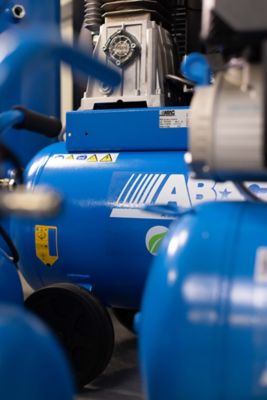


The air receiver stores compressed air and acts as a buffer between supply and demand. This helps stabilise pressure, reduce pulsations, and support short‑term peaks in air consumption.
In a compressed air system, the compressor is only one part of the overall installation. The air receiver plays a central role in stabilising pressure, supporting short‑term demand peaks, and protecting the compressor from unnecessary mechanical stress. For rotary screw compressors, correct receiver sizing is essential to achieve stable and reliable operation.
By storing compressed air between production and consumption, the receiver helps balance the system and maintain consistent airflow when demand fluctuates.
Why The Air Receiver Matters In Screw Compressor Systems
An air receiver tank temporarily stores compressed air before it is distributed through the network. This stored volume allows the system to absorb short‑term variations in air demand without forcing the compressor to immediately react to every change in consumption.
A correctly sized receiver contributes to pressure stabilisation, pulsation reduction, and smoother overall operation. It also supports preliminary condensate separation, helping to limit the amount of moisture entering downstream equipment.
Receiver Size, Load Cycles And Compressor Protection
Receiver sizing has a direct influence on compressor operating behaviour. In fixed‑speed rotary screw compressors, the machine alternates between loaded and unloaded conditions. If the receiver volume is insufficient, these transitions occur too frequently.
Excessive cycling increases mechanical stress on components such as inlet valves and control elements. Providing adequate air storage extends the duration of each operating phase, helping to keep cycle frequency within acceptable limits and supporting long‑term mechanical stability.
Pressure Stability And Demand Fluctuations
Compressed air demand is rarely constant. Machines starting up, tools engaging, or process changes can all create sudden peaks in consumption. When buffer capacity is too limited, these peaks may lead to pressure drops that affect downstream equipment and process performance.
The air receiver helps mitigate this effect by releasing stored air when short‑term demand exceeds compressor output. This stabilises system pressure and ensures connected equipment continues to operate within the required pressure range.
Sizing Considerations For Different Operating Conditions
Several factors influence the correct size of an air receiver, including compressor capacity, operating pressure band, consumption profile, and control strategy. In installations with multiple compressors, the receiver is typically sized according to the capacity of the largest machine.
Receiver sizing should also be reviewed when operating conditions change. Increases in air demand or installed compressor capacity may require reassessment of receiver volume to maintain pressure stability and controlled cycling. The same sizing principles apply across both fixed‑speed and variable‑speed systems to avoid inefficiencies and condensation‑related issues.
Tank‑Mounted Solutions As A Practical Option
In addition to separate receiver installations, tank‑mounted compressor solutions are already available. In these configurations, the air receiver is integrated directly beneath the compressor, combining air generation and storage into a single, compact unit.
This approach simplifies installation, reduces footprint, and ensures that a suitable receiver volume is already matched to the compressor. Tank‑mounted solutions are particularly practical where space is limited or where a straightforward, ready‑to‑install configuration is preferred.
Frequently Asked Questions
Receiver volume, together with pressure settings, influences how frequently a compressor switches between load and no‑load operation. Proper sizing helps reduce excessive cycling and limits mechanical stress on key components.
Yes. When compressor capacity or air demand increases, the existing receiver volume should be checked to ensure it still provides sufficient buffer capacity. Resizing may be required to maintain pressure stability and controlled operation.